Updated: Category: Strategy
My post on the economics of writing technical books turned out to be popular, so I figured I’d share a bit on the economics of technical speaking. In 2025 I taught 21 in-house workshops, held 4 public workshops, and gave 20 keynotes and talks in-house and at conferences talks. That was a lot, and perhaps the result of pent-up demand combined with my insecurity about being independent.
Year-end is a common time for reflection, so I’ll shed a bit of light on the financial aspects of public speaking.
What or who is the product?
When you’re speaking for money, you’re obviously selling a product for a price. The internet bubble of 2001 established a saying that’s oddly relevant two decades later:
If you’re not paying for a service, you’re not a customer. You’re the product.
This slogan derives from advertising-funded on-line services. As a user of those services, you’re the actually product being sold, because your “eyeballs” (figuratively speaking) are valuable to advertisers. For speakers at technical conferences, the logic is similar, but rather the inverse:
You’re clearly the product that the audience pays for. So shouldn’t you be paid?
Sponsors being willing to pay for a speaking slot supports some event organizers’ belief that they have an audience to sell (the product!). For them, giving independent speakers a speaking slot appears like a present. The tricky part is that the same event also sells speakers to the audience for a fee (also the product!). Could this be the ideal multi-sided market, like a trade-fair where exhibitors pay for a booth and attendee pay admission? The key difference is that the content track at technical conferences should be educational, not business development. That’s what the exhibitor floor is for. Sometimes the lines do blur, particularly when speaking slots are allocated to paying exhibitors.
So, the logic that both sides pay for the other as a product seems rather creative. For sake of comparison:
Companies pay movie producers (a lot) for product placements, whereas actors get paid (also a lot)!
The audience pays to see the actor and tolerates the placement, not the other way around.
Why speak in the first place?
First off, you should have more motivations to speak than just making money:
- Networking with peers thanks to free admission for speakers
- Exposure and business development for workshops, consulting engagements, or book sales (but watch out for the economics of writing technical books)
- Compensation is last by intention. Speaking to make a living is reserved for very few, very accomplished speakers.
The first item is a major motivator for speakers who are scattered around the globe and traveling a lot. Some events feel like a family reunion and at events like Yow! Australia, speakers get to spend an entire weekend with their peers.
Number 2 reflects the notion that the audience is a valuable product sold to the speaker. However, they expect educational content, not marketing. For independent speakers, good content should be their best marketing tool, such as sharing a cool thing they built or challenges they encountered.
Motivation #3 is the subject of this post.
Technical events are tough business
I have good friends who run events (or used to), so I know well that running a technical conference is no walk in the park, especially post-pandemic. Attendance numbers are down a good bit compared to 2019, forcing organizers to watch their costs very carefully. Many costs being fixed and payable upfront poses a major risk for event organizers. Booking a suitable venue with AV and catering are major expenses along with marketing cost. They are all due early in the cycle, which is one of the reasons virtually every event offers an early bird or sometimes “blind bird” discount for early sign-ups. Early attendee payments improve cash flow and reduce the organizer’s risk.
Besides the financial risk, events also have to deal with speakers canceling on short notice due to illness, possible code-of-conduct violations, AV hiccups, transport strikes, sub-par presentations, or changes in visa regulations. I have seen all of these happen, and the list is far from exhaustive.
That’s why I admire the amount of preparation and passion that goes into recruiting speakers, promoting the event, and assuring smooth operations. Here I want to share my experiences as a speaker, with a special eye on economics. I used to speak at a dozen or so events per year (being employed made that possible–more on that soon) and am still doing quite a few, so I clearly enjoy public speaking. I used to keep a log of all the events I spoke at, but at some point I fell behind. It’s safe to assume that I am well into the hundreds.
Did you come for the speakers or the coffee?
There is no firm rule on how much events pay for speakers, with both $0 and $25,000 being real numbers. But for bigger events, the uncomfortable truth is:
Many events spend more money on morning coffee than on the keynote speaker.
Don’t underestimate how much an event venue charges for a coffee and a brownie–$15 is probably a lower bound for hotels in major US cities. For a larger event, the breakfast can run $10-20k. That’s not chump change and the reason why large events routinely feature breakfast and lunch sponsors.
More likely than not, you came for the content and not the coffee, which makes the event paying for the latter and not the former odd.
Free Keynote Speakers
Some good keynote speakers do come for free: those who are gainfully employed don’t need a fee and often actually can’t accept one per company policy [I would occasionally accept a travel stipend to overcome my employer’s travel policy of 13 hours in economy class]. Many employed keynote speakers have great content to share, and their employer gets branding value, both for their product and as a potential employer. So, everyone can win, as long as the employer allows the speaker to share real experiences and not just replay marketing messages. Also, note that many large tech employers run their own events where you may see the same speakers, often without paying (think AWS Summits).
You can often reverse-engineer an event’s compensation model by whether the keynote speakers are employees or independents:
An independent keynote speaker is generally paid, whereas an employee is likely not.
An event that doesn’t pay speakers doesn’t have to be sub-par. It just means that the organizer took a bigger cut from your admission ticket. Some event organizers have refined this model rather well. For example, at QCon San Francisco 2025 keynotes were given by employees from Microsoft, Carta, and MongoDB. Workshops were mainly offered by folks affiliated with AWS, Broadcom, ThoughtWorks, and IBM.
You can quickly guess their compensation model. Still, you got to experience Nicole Forsgren as top-of-the-line keynote speaker. And, you can be sure that the morning coffee was paid for.
The hotel makes money, so should you
Some events offer to cover speakers’ travel expense. It’s much appreciated, and beats having to pay for your own. But it also has an awkward implication:
If an event covers a speakers’ travel expenses, the airline and hotel get paid, but not the speakers.
Just like the morning coffee, I’d argue that the airline or train company bring limited value to the event compared to the speaker, so things appear to be backwired.
The Simple Law of Money Flow
After becoming independent, I routinely follow rule #0 from my previous post:
Rule #0: If someone else makes money in a business arrangement, so should you.
Being the product that attendees come (and pay) for makes it a fair proposition for speakers to ask for compensation at for-profit events. Oddly, the frequent answer is “we didn’t budget for that”, which translates into “we rather pocket the money”. While for early-career speakers the exposure gained may be suitable compensation, that won’t hold for top speakers that the audience pays to see.
I learned how protective for-profit event organizers can be of their revenue stream last year: I taught a workshop and on my free day (with horrible rain) I asked to peek into a workshop about a topic closely related to mine. The organizers were adamant that I would have to pay the full workshop fee. After I voiced my dissatisfaction, they have not invited me back to speak. Luckily, those events are the exception, and most organizers treat their speakers very well, because they do know it’s the product that they sell.
Rule #0 does not apply to community events, including those that charge a nominal fee to cover expenses. I do speak for free at non-profit events like the AWS DACH Community Summit. It’s a great event run by a non-profit body, is free to attend, and attracts great content (AWS and exhibitors cover venue, AV, and catering cost).
How much are 45 minutes of your time worth?
Once the logic that speakers should be compensated is established, you quickly encounter the next question: what’s should a 45-minute talk or keynote cost? As mentioned in the beginning, the range is very wide. A few heuristics are helpful to frame the discussion:
Time spent
Beginning speakers often think in hourly rates. Then, $300-400 would seem a handsome rate. But that’s using the wrong baseline, for two reasons. First, it would have taken you months, if not years, to gather the content for the talk. Second, most events will take a full day or two out of your schedule, if you consider travel. At a nominal day rate for accomplished IT professionals, your own opportunity cost (what you could have earned otherwise) would make USD/EUR/GBP 2000-5000 a better number.
Ticket price
Jacqui Read and I once brainstormed an unconventional but fair compensation strategy: basing the speaker fee on the ticket price. The ticket price indicates the value of the product, which is you (not the morning coffee). Also, asking a higher fee for more expensive events seems fair. The right factor is surely up to debate debate, but for a keynote, I consider 3-4x the price of a full-price admission to be reasonable. Some commercial events charge each attendee USD 2000, so as a keynote speaker you should not have a sliver of guilt asking for USD 7,500. Ironically, the events charging attendees the most are often the ones who “don’t having a speaker budget”. They like to double-dip (and typically carry a lot of overhead).
Trying to break down the ticket price, let’s assume each attendee pays $750 to listen to speakers over the course of two days (another $750+ likely go to the venue, AV, marketing, etc). 2 days may accommodate 15 time slots. Keynotes are generally given to the entire audience, so each attendee would be paying $50 for your slot. At 500 attendees, that’s a decent amount of money: $25,000. Also, your name will attract more attendees and add to the brand image of the event. If the event only sells a dozen more tickets thanks to you, you’re almost free.
Audience opportunity cost
For company-internal events, you can’t use ticket prices as a proxy, but you can consider the cost of the audience’s time. For example, having 100 executives (at a loaded salary cost of $200 per hour) listen to a 1-hour session would cost the company $20,000 just in opportunity cost. Asking for $5000 to make that hour an awesome learning experience ($50 per head) appears reasonable.
Economic moat
Factoring the time you spend delivering a talk is the worst possible starting point. It likely took you years to gain experience, build content, sharpen your message, and build your personal brand. That is what Warren Buffet would call your economic moat:
How expensive would it be for someone else to build a product similar to yours?
I am routinely asked to speak at events that require industry expertise (Financial Services) and local language skills (German). My customer clearly would not hire a competitor to speak, and many shun consultants who pitch grandiose transformations without actionable guidance. The result is demand for a product with very limited supply. Your pricing should reflect how many people can do what you do.
Test the market
Several of my friends advised me that if I don’t lose 25% of inquiries due to price, I am too cheap (I surely am, as I lose very few engagements due to price). In the end, your time is worth what someone is willing to pay for it. And you determine that by running pricing experiments.
Your time is worth what someone is willing to pay for it.
There’s a few caveats here. First, the clients with the deepest pockets don’t always make the best clients for you, in terms of learning opportunities for you or in the overall vibe of the event. Also, rates will vary by region. I noticed that acceptable rates in the UK, Switzerland, or the Nordics, are noticeably higher than in Germany or France, for example. So, location and type of customer should factor into your model.
Price for impact, not effort
An old fable reminds us to charge by the value we deliver, not by the time we spend:
A ship couldn’t depart because its massive engine would not start. After the engineers exhausted all options, they hired an expert. The expert looked around for a few minutes, took a big hammer, knocked it once on the engine, and, voila!, the engine started. When the customer expressed discontent at the $10,000 bill, the expert itemized it:
#1 Hitting the hammer: $10
#2: Knowing where to hit: $9,990
For a keynote speaker, scoring a hit with the audience is what you should get paid for, regardless whether the session takes 20 minutes or 60. If George Clooney can pocket 6 or 7 figures for lending his smile to coffee capsules, why shouldn’t we pocket 4 or 5 for 60 minutes of meaningful content?
Not seeing the value in what you do because it seems easy to you is a mistake I likely made for a decade of my career:
The value of what you do isn’t related to how hard it is for you.
I routinely remind myself that the things I do now were not at all easy for me some time ago: whipping a meaningful executive presentation together on super short notice, examining architecture decisions and trade-offs, distilling debates down to the essence and capturing it in a evocative diagram. I worked hard to get better at it, and no, AI isn’t nearly as good at it. So, my effort can demand compensation.
Workshops
Workshops can be a great way to balance out event economics for all parties involved: attendees, speakers, and organizers. Workshops don’t benefit from sponsors, but feature direct and transparent cost allocation: attendees pays specifically for the workshop, and the cost of facilities and catering can also be directly attributed. If attendees pay $800 for a 1-day workshop, and the venue plus meals run $200 per head, 20 attendees would net $12,000 gross profit to be split between speaker and organizer.
In my workshops, attendees learn much from each other, not just from me.
The Achilles heel of this reasonable fair setup is that it favors larger workshops. Keynotes scale easily to hundreds or thousands of attendees, but my experience is that the learning experience in a workshop depends on the interaction between attendees. After all, it’d be odd if a dozen people could only learn from me and nothing from each other. That’s why I limit my public workshops to 20 attendees, and actually prefer 15. If you have unhappy customers because you oversubscribed your workshop, economics don’t matter.
Show me the money!
So, you may try some quick math: if you can get $4000 for a keynote and $10000 for a 2-day workshop (not impossible numbers), that adds up to $24,000 a week and…$1.2m per year, with a week off for holidays! BAAAP–remember the game show sound from the previous post? Wrong answer! The few weeks I filled with a 2-day and a 3-day workshop or an event plus a workshop were a total nightmare. I left home on Sunday, had to skip the speaker dinner (one of the main networking opportunities), arrived in the next town at 1:30 am due to cancelled and delayed trains, and got home Saturday morning thanks to a missed flight connection and sold-out flights.
Overhead
Don’t forget that you have to find customers, issue quotations, discuss scope and pricing, plan your schedule, endure vendor onboarding, sign NDAs, make travel arrangements, track expenses, and create content! You can outsource some of this to an accountant or a travel agent, but I still spend a vast amount of time on overhead. I know of some folks where their partner acts as an agent / manager to take as much burden off the person traveling and speaking. I should perhaps track my time spent on these more closely to see whether it’s worth outsourcing more.
Load factor
My original plan was to do 5 days a month of speaking plus 5 days in my role as fractional CTO, and then have 2 weeks off! Per quarter that would have meant 15 days of workshops and speaking and 15 days in a fractional role. In the end I did slightly more, between 18 and 20 days of workshops per quarter. And it was far too much! Don’t forget that in Europe you won’t have hardly any business in August and from mid-December to mid-January, which compresses 12 months into 10. So the 75 days I did actually mean 7.5 days per month. Again, it may not sound like much, but I had months where I spend only 3 or 4 nights at home.
Managing a balanced pipeline has not been easy. It seems to be a constant feast-or-famine ping pong: sometimes it feels that I have too little work 2 months out, just for me to curse having overcommitted again when the time actually arrives. I know folks who plan almost a year out, but I lack the discipline for that, and am also not sure my clients want to wait that long (they often have budget cycles to adhere to). I try to plan a few big gigs (especially those that involve long-haul travel) a quarter or more out, and fill in the gaps with things nearby.
Travel overhead
It’s easy to forget how much time you’ll spend traveling: that “1 hour keynote” really means arriving the night before, spending the morning with tech checks, and the afternoon traveling onwards. So, it’ll take more than an entire day of your time. And much of the transfer time will be lost time, used for checking emails at best.
If you travel to your clients, any load factor over 50% seems illusionary, perhaps except for short bursts. Also, keep in mind that you need to stay up-to-date and create new content, which I find hard to do in 30 minute increments while waiting for a delayed flight.
Average Selling Price (ASP)
The key challenge I encountered with speaking engagements is the low average engagement price. A 1/2 day speaking engagement can consume 1/2 day in paperwork and another 1/2 in travel. Your awesome rate is now only one third of what you thought. My 3-day workshops and 5-day architecture enablement helped reduce the overhead (which roughly stays the same) compared to the project size (50% revenue increase for a 3-day workshop).
Leave room for experiments
As you use the mental models to set your speaking fee and aren’t shy to ask for-profit events for fair compensation, keep in mind, though, that community isn’t a formula. The best input on this aspect came from old friend (and respected speaker) Sam Newman. Each year, he selects one off-the-beaten-track event, where his speaking fee isn’t a factor. It could be in an unusual location, attracting a different audience, or using a novel format. This way he can discover new events and avoid wearing himself out with the same events over and over. Some exploration is valuable, and may in fact pay for itself many times over.
Final rule
In summary, you likely should not speak just for the money. But you should not feel bad about asking to get paid.
Grow Your Impact as an Architect
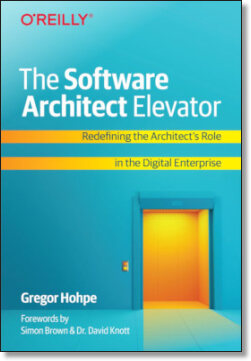
The Software Architect Elevator helps architects and IT professionals to take their role to the next level. By sharing the real-life journey of a chief architect, it shows how to influence organizations at the intersection of business and technology. Buy it on Amazon US, Amazon UK, Amazon Europe